CLICK on this WELCOME message

Welcome to Mohel in South Florida

Welcome to mohelinsouthflorida.com -  the most comprehensive and up to date mohel blog on the internet . My name is Avi Billet, and I am so ...

Showing posts with label numbing. Show all posts

Wednesday, June 29, 2016

Topical Analgesics


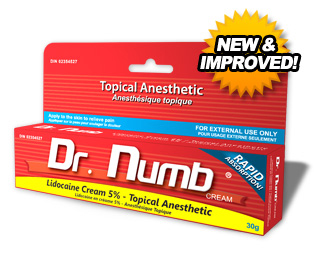
I am not recommending this product. The picture is here to make this blog post more exciting
For those who want to numb the foreskin prior to the procedure, I recommend you speak with your pediatrician about what options there are, and getting a prescription for a topical analgesic.

Easily the most popular namebrand topical analgesic on the market today is EMLA cream.
Image result for EMLA cream
This is EMLA cream - probably the 5% stuff recommended in the 2nd article linked below

There are studies about other topicals used for circumcision. Of course, understand that all of these studies are done in hospitals where the circumcision procedure is typically considerably longer than a traditional bris. In these case-studies, the baby is "under the knife" or the circumcision instruments and implements for much longer.

The following options are for those who have a compounder nearby - or if your doctor has a prescription idea that sounds like something described below.

The first article I became aware of - saying a 30% lidocaine (with 70% acid-mantle base cream) if efficacious and does not have significant absorption of lidocaine in the body:  http://www.ncbi.nlm.nih.gov/pubmed/8414860

The second article notes the previous one, but suggests that a 5% lidocaine-prilocaine cream is even better: http://www.ncbi.nlm.nih.gov/pubmed/10912985

See also this: https://www.uspharmacist.com/article/drug-therapy-considerations-in-circumcision
This one raises other options which include injections. Injections might be the most effective, but remember that no child likes shots, especially not in his penis, and that shots hurt when administered, and have the possibility of hurting later as well.

For those who want something to numb the area, I recommend topical creams as described above. The cream needs to be put on for at least 20 minutes before the procedure (though the longer it is on the more effective it is), and wrapped in place with a piece of plastic-wrap so it doesn't rub off in the diaper.

For those who opt not to do this, your baby, like millions before him through the generations, will be fine.

Tuesday, May 12, 2015

Doctor vs Mohel

No, it's not the fight of the century.

But it is a question which comes up a lot. So here is the simple answer, from a mohel, of course.

[Though see here for a Reform Rabbi's answer http://www.jweekly.com/article/full/15332/which-one-is-better-doctor-or-mohel/]

Every person must do research and find the best operator for your needs, and for your situation.

In an ideal world, the person you are hiring is an observant Jew, who understands the significance of Bris Milah, the covenant, and all the laws associated with the performance of a bris milah. Whatever character traits you'd like in the person might also be significant to consider, when thinking about what kind of representative you (especially the father, who is really hiring the person to perform this mitzvah in your place) want to fill your place in this very important mitzvah.

ANYONE WHO FILLS THESE ROLES TO YOUR DESIRES IS A GOOD HIRE. [Even better, if he uses a marker when operating...]

Other things to consider:

1. Specialist

Who does more procedures? Many doctors I know (they are usually observant Jews) highly recommend a mohel over a doctor. They have the attitude that the mohel is a specialist. This is his field. He is the expert. Being highly trained in a specific discipline, and specializing in this unique field, makes the mohel most qualified to do this. [Obviously if a doctor happens to also be a mohel, this will work to his advantage in some people's eyes. But honestly, the service a doctor/mohel and a mohel provide is the same thing with respect to the circumcision and the result, except perhaps in two areas as I'll note below]

2. Method

Most doctors are more comfortable using a clamp - such as the Gomco or the Mogen clamp. Do research on these items, to decide if they are right for you. Some mohels (usually on the very modern side, or in the Conservative and Reform movements) use the Mogen clamp or a modified Mogen clamp. Most traditional mohels use what is called in Hebrew a Magen (מגן), a traditional "shield" (which protects the glans and the scrotum) which does not have a clamping arm. THIS IS THE PROCEDURE I USE While no procedure is completely bloodless (a real bris is not supposed to be bloodless), the clamps are supposed to cause less bleeding. The traditional method may have a little more bleeding, but in the hands of a good mohel, it is absolutely nothing to worry about.
And, as Rabbi Cartun points out in the article I linked to above (here it is again), the speed in which a mohel operates is usually much faster than any physician.

3. Numbing

See here for a discussion about this. Most doctors will give the baby several injections to create a nerve blockage. While the baby might not feel the bris, the baby will feel the injections (and may feel them hours later as well). Some mohels recommend or provide a topical anesthetic. Depending on its strength, it may remove the pain of the actual circumcision.

4. How is baby held?

Numbing does not help the baby's discomfort at having his legs held down. Most mohels have the sandak holding the baby's legs, and letting go as soon as the procedure is over. Many doctors might utilize a circumstraint to hold the baby, leaving the baby in an uncomfortable position significantly before and sometimes after the procedure as well.

5. Track record and Touch-ups
Probably the most important question is "what is the track record?" While I don't have statistical evidence, I have spoken to pediatric urologists and pediatric surgeons who have told me anecdotally that they do many more touchups on circumcisions done by doctors than by mohels. [Don't trust me. Ask similar doctors that you may know.]
Doctors tend to take off a little less foreskin, which leaves the penis looking uncircumcised in many cases of touch-up necessity.
[Many "problems" disappear when the child gets out of diapers, and certainly by puberty. But for babies who need their circ to be revisited - it is worth asking people and doctors who has a better track record.]
A surgical marker could resolve this issue, but most mohels and doctors don't use one (though I do! :))

I guess it is clear that I prefer a good and experienced mohel over a doctor. Surprised?

Friday, February 3, 2012

Numbing

I once addressed the "numbing" question in a posting that covered a few topics.

Since it comes up every now and then, here are a few thoughts to consider.

Concerned parents have different attitudes about numbing the foreskin before the circumcision. Here are a few examples of things that have been shared either with me or between parents who discuss this in my presence:
  • Babies have been circumcised for thousands of years without numbing. He'll be fine without it.
  • If you can do anything which will ease his discomfort, we'd appreciate it.
  • Babies nerve endings aren't developed as much. He doesn't feel it so much anyway.
  • He feels something, but he cries every time we open his diaper.
The feelings run the gamut, but they are also tainted by a little bit of misinformation.

#1. BABIES FEEL PAIN. The "nerve endings aren't developed" argument is a load of hooey. To suggest that a baby doesn't feel pain is to assume that a baby only cries when hungry or when needing a diaper change. Give a baby a blood test and you'll hear cries of "bloody murder."

#2. ALL STUDIES OF THE PAIN BABIES FEEL DURING CIRCUMCISION ARE IN HOSPITAL PROCEDURES (with either 0 or local anesthesia) WHICH CAN TAKE BETWEEN 10 AND 45 MINUTES. A BRIS, ON THE OTHER HAND, TAKES A FEW SECONDS. In other words, while there is pain at a bris, the amount of pain is directly correlated to the amount of time the procedure takes place. Since the bris is done using a different method than the hospital procedure, the painful part is minimal, in comparison to the rest of the time which I define as "discomfort" (ie. let go of me, stop putting pressure on my circumcision wound, close my diaper, let me eat, etc.)

#3. INJECTIONS ARE MORE PAINFUL THAN THE BRIS. We know injections are sometimes important. But that doesn't mean that they are painless. Even if we can withstand the needle, there are some shots that hurt hours after adminstered. Typically injections for a circumcision are done in three places, around the circumference of the dorsal (belly) side of the penis, to create what is called a "penile block." It makes the baby relatively calm during the circumcision, but at the cost of three painful injections.

#4. TOPICAL ANALGESICS WORK FOR THE MOMENT OF THE BRIS, BUT DO NOTHING ONCE THE FORESKIN IS GONE. Essentially, the shaft of the penis will not have sensation, and the baby can be quiet in the moment the foreskin is excised. But when pressure is applied to the now-open wound, all bets are off. The baby will likely cry even if the area was numbed beforehand, simply because he is uncomfortable (see the end of #2 above).

MY PERSONAL FEELINGS

I think injections are good for the doctor in a hospital setting (assuming he is working with a newborn and is not using general anesthesia), because a hospital procedure - or any procedure that includes a clamp utilized for more than a few seconds - is long, arduous, and painful to the baby if the area is not numbed. But I don't believe injections are beneficial to anyone in the event a mohel is circumcising using a more traditional circumcision method/procedure.

I have no personal problem or objection to the use of a topical analgesic/numbing agent, as long as I know what it is and it has a decent track record. There are debates about EMLA cream, for example. A doctor I know recommended I introduce people to "ELAMAX," which can be obtained OTC at a drugstore (just ask for it). I used to carry a 30% lidocaine cream that I had made by a compounder, as per a prescription given to me by a doctor (email me if you'd like to see the article that introduced me to this idea - I can send you the pdf). But it became complicated to get to people or if I only saw the baby a few minutes before the bris it was not enough time to put it on, so it wasn't worth the hassle.

There are other issues to consider as well (if you really care, see Phil Sherman's discussion of this in Q14 on his FAQ page), so I don't raise the issue unless people ask.

Simply put, I have found that the "pain concern" is more of an issue for parents than it is for the baby. When the bris is over - more accurately, when I close the diaper and get the baby dressed - he is usually fine. When I am done, the discomfort is over. The "pain" is over as soon as the foreskin is removed. Some babies still need to eat, but some go right to sleep. A little bit of Manischevitz does wonders.

To quote one of my teachers, there are two mitzvahs for which God said "You will feel pain." One of them is Bris Milah (the other is fasting on Yom Kippur). But, he argues, we do not need to maximize the baby's pain. He is therefore an advocate for using the numbing cream. Which is why I won't object to the proper cream being used. I will add, however, that the speed in which we operate is its own form of anesthetic. The method we use is far less painful than a "clamp method." All told, the traditional Jewish method minimizes the baby's pain as much as possible by its quick and simple design.

I mentioned above that the pain concern is more of a parental one. One of my colleagues is fond of saying that the person who feels the most pain at the bris is the... baby's mother. Sometimes the father too. The best anesthetic, therefore, is to pour two shots of whisky. Give one to Mommy, one to Daddy, and the baby will be fine.

Sunday, November 15, 2009

Putting Parents At Ease - More Considerations

Over the weekend, I attended a presentation/discussion in which one person mentioned her impression that bris turns some people off from Judaism. Almost as an aside she said "They think it is barbaric."

It wasn't my forum, so I kept quiet. I have a lot to say on the subject, but it's for a different place. My blog, for example.

Firstly, I don't believe the bris turns people off from Judaism. It's a big world out there. People who are unhappy with Judaism will find any excuse they want.

As far as circumcision being barbaric, that statement is a hard sell in the United States when over 60% of the newborn male population is circumcised - either routinely with a clamp (with or without a local anesthetic), in the O.R. under general anesthesia, or as part of a religious or holistic ceremony - and until relatively recently, over 90% of the newborn male population of this country was circumcised.

The American Choice

In American culture, people have all kinds of reasons for circumcising their sons. I learned about this recently when our son was born, when my wife and I were handed a pamphlet about circumcision which boiled the choices down to two: "to circumcise or not to circumcise; that is the question."

They have a number of reasons why people may opt to circumcise.
* Medical suggestions that urinary tract infections, penile cancer, and other penile illnesses (including STDs) are less common and the penis is less susceptible when circumcised.
* It is easier to clean.
* Family - father and brothers are circumcised
* Cultural - everyone else does it
* Aesthetics - You like the circumcised "look" better than not.
* And, of course, religious reasons.

Reasons not to circumcise include:
* It is healthy tissue which guards a very sensitive area of the body
* No medical benefits if the child is taught how to clean under the foreskin
* Why subject a child to such surgery, which may be unnecessary?

The "barbaric" nature of circumcision is not raised, even if people may personally feel it to be such.

Why Jews Circumcise Their Sons

While the religious reason is most obvious, the best verbal explanation I have heard of late was in the documentary "Partly Private" - a film made by a secular Israeli woman living in NY, who was researching whether or not to circumcise her as-yet-unborn son (they had circumcised his older brother, but were displeased with the experience).

When a number of her Israeli friends gathered to be a sounding board for her deliberations, one of her friends who had become observant said, "If you are deliberating circumcision because you think it is 'barbaric' - you are right. Don't circumcise. But if you have faith in God and understand that this is what God asked of the Jewish people, as this is a mark of the covenant He forged with Abraham, then this is not barbaric. This is an act of love: for your child, for your people, for your God."

He is so right. The reason we circumcise is FAITH.

But it's still BARBARIC, Right?

It really depends on your perspective.

Most medical authorities who deal strictly from a medical perspective (in other words, who do not have an agenda), will argue the benefits versus the risks, the pros versus the cons. Very few will call it a barbaric procedure.

Most people who call it barbaric have an agenda, have an obsession, and find it hard to not think about how life (read "sex") would be different if the parents had not chosen to "make the cut" on them.

And they'll usually show a picture of a red, screaming baby to show the kind of pain a baby feels when undergoing a circumcision.

Before we continue, it is important to understand that there are different kinds of circumcision procedures, and all kinds of situations that can make a baby cry and scream bloody murder.

Setting the record straight

Babies cry. They scream. They can be in all kinds of discomfort. And sometimes there is not much we can do to ease their pain.

Babies who have blood tests, shots, raw diaper rashes, or sometimes just have colic may very well be inconsolable. Would you not have your baby have the necessary blood test or innoculation just so your baby won't ever cry?

Sometimes benefits outweigh the downsides. And sometimes not.

There are some who will argue that babies nerve endings are underdeveloped and so they don't feel the circumcision.

This is a lie.

Babies absolutely feel pain. But they only feel the pain to which they are subjected - and that, only if nothing is done to numb them from the pain. Which brings us to two points worthy of consideration when considering the difference between what is known as "routine circumcision" and a bris (A circ in an O.R. is a completely different story, because once the baby is under general anasthesia, all bets of pain and discomfort are off.)

SPEED OF PROCEDURE and NUMBING

Click this line to read the article in which it appears: "A mohel does not usually use anesthetic, because his anesthetic is the speed with which he does the circumcision. "

Most routine circumcisions are done elaborately, painstakingly, with a clamp that crushes the skin in order to achieve hemostasis. Since the skin is essentially dead when it is excised, there is usually no bleeding by the time the last skin is removed. Kudos.

Meanwhile, the baby has been in excruciating pain throughout the procedure (which usually takes between 5 and 20 minutes), unless the circumciser has used a penile block (3 injections around the circumference of the penis, along the lower base of the abdomen), to numb the area during the procedure.

3 injections = 3 shots. If your kid screams during one shot, imagine THREE, even if their outcome is a numbing. The shots themselves are painful!

A good mohel is usually done with the procedure, start to finish, in between 5 and 10 seconds. That's less time than it takes to administer the injections. Yes, there is usually a little more blood at a bris (only a little), but the drawing of blood is (like it or not) a necessity for the procedure according to Jewish law. The covenant was forged over blood. (If you like movies, you can see how a covenant is forged over blood in Kevin Costner's "Robin Hood" when he swears to avenge his father's murder in the first quarter of the film - I used to have a link to youtube here, but the video was taken down.)

NUMBING [See this posting - in which I revised what I wrote below - AB, 2012]

I happen to be a fan of numbing the foreskin, but not with injections. I prefer a topical analgesic with a dose of 30% lidocaine + 70% acid mantel cream base, to be applied to the penis at least a half hour before the bris. It doesn't hurt the baby at all in its application, and it does the same thing for the small amount of time it is helpful. Most of the discomfort at the bris comes from being handled, not from the pain of the bris (proof is that the baby usually stops crying once he is no longer being touched).

And even without it, the bris speed is, as mentioned above, its own form of anesthesia.

In Conclusion

If I were not Jewish, would I circumcise my son? Knowing what I know about circumcision, I probably would. My wife would probably not, just because she would not want to subject the baby to a painful experience - even a fleeting one.

As we are Jewish, we agree that we do it because the Torah commands it of us.

I don't think it is a barbaric custom, and I think those who do it properly have a tremendous sense of satisfaction that the baby is well and that the chapter of bris is behind them.

Consider the method and you have your answer. (Clamps, injections, drawn out, hospital v home, physician, resident, mohel, surgery v bris)

And hopefully, if you call me, you'll find what you're looking for in a mohel and you'll uncover the answers to more questions through our conversations.